Table Of Content

Bauhaus blurred the lines between disciplines and used arts and crafts techniques to maintain aesthetic standards in an increasingly mass-produced, industrialized world, all while using materials and resources in an intelligent and purposeful way. By synthesizing fine arts, crafts, design, architecture, and technology, the Bauhaus promoted rational, functional design that embraced a form follows function, less is more ethos for a new post-war era. Bauhaus developed into the International Style when Gropius and other prominent members of the Bauhaus emigrated to the U.S. in the 1930s and later influenced the development of modernism in the 1950s and '60s.
Five things you need to know about the Bauhaus movement - The Independent
Five things you need to know about the Bauhaus movement.
Posted: Fri, 12 Apr 2019 07:00:00 GMT [source]
What are the iconic examples of Bauhaus architecture around the world?
Secondly, Bauhaus architecture focuses on the functionality and efficiency of the design rather than the ornamentation and decoration. Bauhaus buildings are designed to serve the needs and purposes of the users rather than to impress or please the eye. Bauhaus architects also considered the social and environmental aspects of the design, such as the accessibility, affordability, and adaptability of the buildings. An example of a Bauhaus building that demonstrates functionality and efficiency is the Fagus Factory, designed by Walter Gropius and Adolf Meyer in 1911.
Related Artists
His first project was a modern Mahatma Gandhi memorial, which impressed the prime minister and encouraged him to design government buildings, public spaces, and its national zoo. Ludwig Mies van der Rohe is remembered most for his work as an architect, but his work as a furniture designer is also hugely influential. The Bauhaus movement spread when the school was shut down in 1933 by the Nazis, and many of the style’s practitioners fled Germany ahead of World War II.
Most influential architects
Bauhaus structures may also be vulnerable to natural disasters, such as earthquakes, floods, or fires, that can cause irreversible harm or destruction. Lastly, the Bauhaus structures are sometimes contested or neglected by the public or the authorities, who may not appreciate their historical and cultural value or have different priorities or preferences for using the land or the resources. The Bauhaus Archive in Berlin, which houses a collection of documents and objects related to the Bauhaus movement, has been closed since 2018 due to a lack of funding and support for its expansion and renovation. Some Bauhaus structures have been demolished or altered beyond recognition, such as the ADGB Trade Union School in Bernau, partly destroyed during World War II and later converted into a hospital.
According to Jensen, minimalist, modern seating not only merged technology with design by harnessing new industrial techniques to create modern forms, it also introduced steel as an interior finish. Pronounced “bow” (as in, take a bow) "house," Bauhaus was an actual school founded in Germany by architect Walter Gropius in 1919. Although it was around for less than 15 years, the Bauhaus revolutionized how we think about design. Incorporating influences from art, technology, and science, Bauhaus ultimately created a new way of designing that embraced rationality and practically, launched modernism, and continues to be prevalent throughout many facets of design today. Inspired by the liberation felt across Europe at the end of World War I, Bauhaus emerged in 1919 and ushered in a new age of cultural experimentation, modernism, and functional applications of artistic pursuits. The importance of the political influences are often debated, with movement's founder, architect Walter Gropius, stating that Bauhaus was entirely apolitical.
LGBTQIA+ Activism in the Arts
The Torin Building, Marcel Breuer1976Penrith, AustraliaAfter being commissioned to build the offices and factories of the Turin Corporation, Breuer was commissioned to design Rufus and Leslie Stillman’s house in the city of Penrith. The residence, which is Breuer’s only project in Australia, was built for almost $5 million with engineering features very avant-garde and innovative for the 1970s. Sonneveld House, Johannes Brinkman1933Rotterdam, NetherlandsBauhaus and the Dutch De Stijl movement drew a lot of inspiration from one another. Their complimentary influence is evident in the residential project built for one of the directors of the Van Nelle factory. A year after the design, he explains, “the whole Bauhaus” was furnished with his tubular steel creations.
What Is Bauhaus Design? History and Characteristics
In an interview with Breuer on Knoll’s website, the designer explains that the enduring design of the bicycle is what inspired the chair. When a young architect explained how the tubular steel was bent, Breuer was fixated on the idea. The local government in Dessau, among the first municipalities in Germany to be won by the National Socialists in 1931, had voted to close the Bauhaus, which was a state-funded school, in 1932. Mies reopened it as a private institution in Berlin later that year, but it only lasted one semester. The Nazis in Dessau sought, according to one fascist editorial, nothing less than “the disappearance from German soil of one of the most prominent places of Jewish-Marxist ‘art’ manifestation,” and they were not going to relent.
A Brief History Of Beijings 798 Art District - The Culture Trip
A Brief History Of Beijings 798 Art District.
Posted: Sun, 08 Oct 2023 07:00:00 GMT [source]
Bauhaus design refers to the art, architecture, furnishings, textile, interior design, and graphic design that came out of the Bauhaus, an influential design school that was founded by Walter Gropius in Germany in 1919. After moving to the U.S. in 1937, Gropius designed the Gropius House in Lincoln, Massachusetts and headed up the architecture department at the Harvard Graduate School of Design. He was joined there by Marcel Breuer, a Bauhaus student who became an architect and furniture designer of such iconic items as the tubular bent metal Wassily Chair designed in 1925, that is still produced and feels just as modern today as it did nearly a century ago.
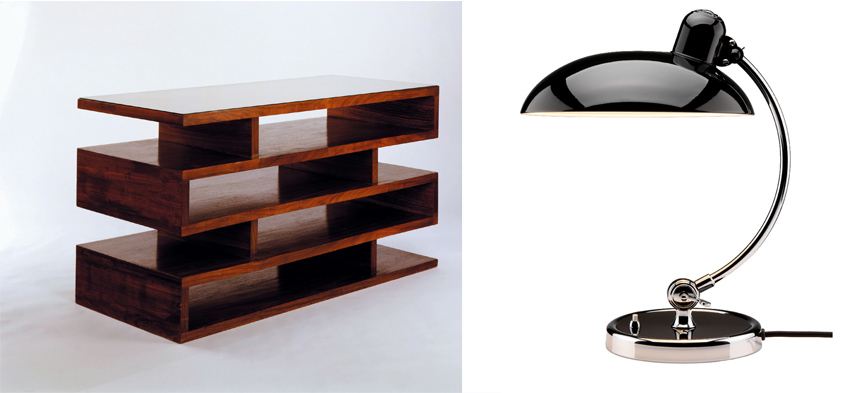
The museum’s permanent exhibition is designed and curated by Barbara Holzer of Holzer Kobler Architekturen and houses the world’s oldest Bauhaus collection. Studying under László Moholy-Nagy, a teacher and artist who also taught Breuer, then later teaching at the Bauhaus herself, Marianne Brandt’s most memorable works from the Bauhaus came from her time in the metal workshop, which Moholoy-Nagy ran. Her tea sets are particularly well-known, as are her lamps, for their unparalleled simplicity. Designed by Josef Albers in 1926 during his tenure as the artistic director of the furniture workshop at the Bauhaus, the Albers nesting tables are celebrated for their unique yet simple design and still in production to this day. Nearly 40 years after designing these tables, Albers published Interaction of Color, a still-influential tome about art education and color theory.
In 1924, German artist Marianne Brandt took the design of a conventional teapot and stripped it of any ornament to create her geometric metal tea infuser and strainer. An architecture guide of Bauhaus-influenced structures around the world that are still standing to this day. Delhi Zoological Park, Habib Rahman1974New Delhi, IndiaAfter India declared its independence in 1947, Rahman needed to build new institutions in the fastest and simplest means possible.
In September 2020, President of the European Commission Ursula Von der Leyen introduced the New European Bauhaus (NEB) initiative during her State of the Union address. The NEB is a creative and interdisciplinary movement that connects the European Green Deal to everyday life. It is a platform for experimentation aiming to unite citizens, experts, businesses and institutions in imagining and designing a sustainable, aesthetic and inclusive future. By eliminating all religious and monarchical symbols typically used in chess, the German designer aimed to redesign the game for a modern age.
Munich-born artist Josef Hartwig designed a 32-piece chess set for the Bauhaus between 1923 and 1924 using minimal lines, circles and squares, to reduce the pieces to their basic function of movement. Breuer was inspired to create the chair while riding his bicycle – he envisioned taking the tubular steel used for the handlebars and bending it into pieces of furniture. Breuer took the traditional form of an overstuffed club chair and simplified it down until it was just an outline, with a canvas seat, back and arms. At the Bauhaus school, he used large expanses of windows to light workshop spaces and clerestories to light hallways; he even designed systems to operate upper windows to help with air circulation. The Bauhaus school was based in Weimar from its founding in 1919 until 1925, when it moved to Dessau. There, they created a campus that is now an icon of modern design and a protected UNESCO World Heritage Site.
With Hitler now chancellor of Germany, the Dessau public prosecutor called for a search of the school’s new Berlin headquarters. The police found materials that were deemed to be subversive, making it subject to closure. Three months of fruitless attempts by Mies and others to forestall this inevitable conclusion followed; they tried various ways to accommodate themselves to the Nazis and preserve the Bauhaus as a private art school. But in the end, the Dessau authorities used a new Nazi law to declare that “support for and action on behalf of the Bauhaus, which presented itself as a Bolshevist cell,” amounted to a political crime.
Bauhaus buildings also respect and reflect the context and character of the site, the culture, and the history of the place. An example of a Bauhaus building that exemplifies sustainable and ecological design is the White City of Tel Aviv, a collection of over 4,000 Bauhaus buildings that were built in the 1930s and 1940s by Jewish architects who fled Nazi Germany. Bauhaus architecture is a modern design style that emerged from the Bauhaus movement in Germany in the early 20th century. The movement was founded by Walter Gropius, who aimed to unify art, craft, and technology in a new building form.
Fabrics from the weaving workshop were commercially successful, providing vital and much needed funds to the Bauhaus. The studio’s textiles, along with architectural wall painting, adorned the interiors of Bauhaus buildings, providing polychromatic yet abstract visual interest to these somewhat severe spaces. While the weaving studio was primarily comprised of women, this was in part due to the fact that they were discouraged from participating in other areas. The workshop trained a number of prominent textile artists, including Anni Albers (1899–1994), who continued to create and write about modernist textiles throughout her life. Bauhaus-style design and decor is a term describing the furniture, objects, graphic art, and interiors that were created as a result of the influential early 20th-century design and architecture movement named after the German school founded by architect Walter Gropius. Bauhaus embodied a form-follows-function, less-is-more approach that still resonates today.




No comments:
Post a Comment